Designing Connected Enterprise Workflows Through Middleware and Cross-Platform Automation
Designing Connected Enterprise Workflows Through Middleware and Cross-Platform Automation
Executive Summary
A multi-industry automation initiative explored the development of middleware systems to connect business applications and coordinate operational processes.
Webzenith Solutions prepared a preliminary pricing and timeline estimate for the proposed middleware automation work.
The underlying engineering opportunity was to improve interoperability between business systems while reducing repetitive cross-application tasks.
Client Context
The proposal concerned an organization exploring automation capabilities applicable across different business workflows and industry environments.
Such implementations may involve existing applications, third-party platforms, internal databases, and business communication services.
Business Challenge
As businesses adopt more specialized software, operational workflows can become fragmented.
Common integration challenges include:
- Information distributed across multiple applications.
- Manual transfer of business records.
- Inconsistent data formats.
- Limited integration interfaces.
- Unreliable cross-system workflows.
- Difficulty monitoring automation failures.
The objective was to explore reusable integration patterns rather than introduce additional disconnected applications.
Proposed Solution
Middleware Architecture
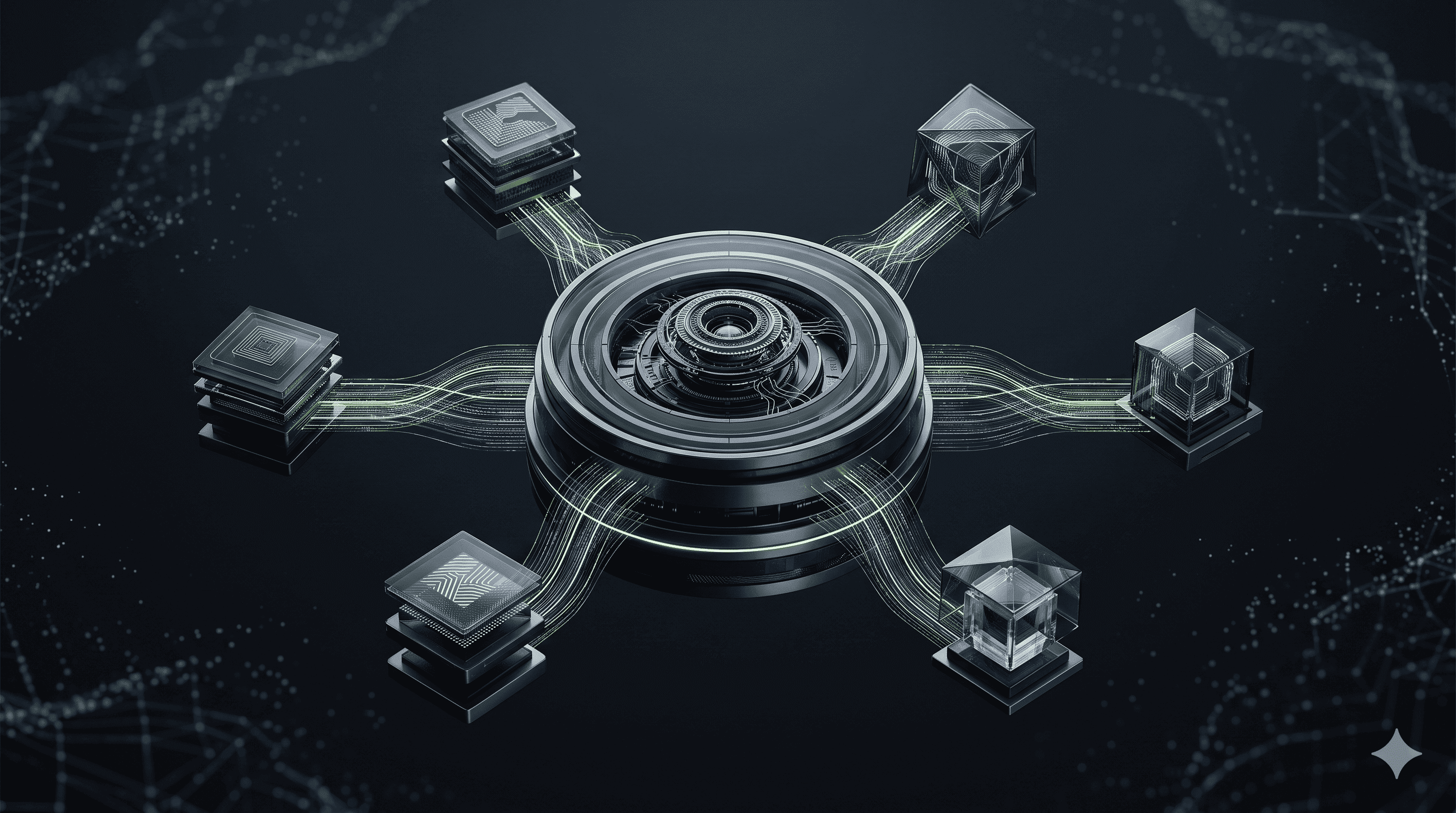
A middleware layer can coordinate communication between approved applications while separating integration logic from individual business systems.
API and Event Integration
Where supported, REST APIs, webhooks, and event-driven mechanisms can be used to exchange information and trigger defined workflows.
Data Mapping and Validation
Integration workflows can normalize fields, validate required information, and apply defined transformation rules.
Workflow Orchestration
Business processes spanning multiple systems can be coordinated through controlled execution sequences, approvals, and status tracking.
Reliability and Governance
A production architecture should incorporate authentication, least-privilege access, logging, retry mechanisms, duplicate-event handling, and appropriate failure recovery.
Intended Business Value
Middleware-based automation can support more consistent information exchange, reduce repetitive data handling, and improve visibility into cross-system operations.
These benefits would need to be validated using actual project measurements, including workflow completion rates, error frequency, synchronization accuracy, and manual effort.
Conclusion
This proposed solution demonstrates the role of middleware engineering in intelligent automation.
Effective enterprise integration requires more than connecting APIs. It also depends on reliable data handling, operational monitoring, secure access, and well-defined business rules.
6 Phases
From process discovery and solution architecture to deployment and optimization.
6 Core Automations
Business process automation, AI workflows, CRM/ERP integration, APIs, document processing, and orchestration.
3 Automations
Rules-based workflows, AI-assisted processes, and coordinated system integrations.
4 Performance Indicators
Defined measures covering operational efficiency, workflow reliability, and customer interaction quality.
CLIENT PERSPECTIVE
The Companies We Build With Say it
Better Than We Ever Could.

CRM Integration | Sales Automation
Designing AI-Powered CRM Intelligence and Automated Sales Workflows Without Replacing Existing Systems
CRM Integration | Sales Automation
Designing AI-Powered CRM Intelligence and Automated Sales Workflows Without Replacing Existing Systems

Hospitality Technology | Conversational AI
Connecting Voice AI Ordering, Payments, and Kitchen Operations Through Intelligent Automation
Hospitality Technology | Conversational AI
Connecting Voice AI Ordering, Payments, and Kitchen Operations Through Intelligent Automation

Procurement Technology | Enterprise Automation
Designing an AI-Powered Government Tender Intelligence and Response Automation Platform
Procurement Technology | Enterprise Automation
Designing an AI-Powered Government Tender Intelligence and Response Automation Platform

Customer Engagement | Voice AI Automation
Engineering an AI Appointment Agent for Automated Customer Conversations and Scheduling
Customer Engagement | Voice AI Automation