AI Development & Agentic AI Solutions
Custom AI Development for Intelligent, Scalable Business Systems
AI Development & Agentic AI Solutions
Engineering Intelligent Systems That Go Beyond Automation
Artificial intelligence is transforming how businesses operate, serve customers, process information, and make decisions. The opportunity goes beyond adopting AI tools. It lies in engineering intelligent systems that connect business knowledge, enterprise applications, and operational workflows.
At Webzenith Solutions, we help organizations design and develop custom AI applications, intelligent agents, generative AI solutions, and agentic workflows built around real business requirements.
From AI-powered assistants and knowledge retrieval systems to autonomous workflow orchestration with appropriate human oversight, our focus is on building practical, scalable AI solutions that integrate into your existing technology ecosystem.
Who Is It For?
Our AI development and agentic AI solutions are designed for organizations looking to introduce AI into meaningful business processes.
- Enterprises modernizing complex internal workflows and knowledge systems.
- SaaS companies integrating AI-powered capabilities into existing platforms.
- Startups developing AI-native products and minimum viable products (MVPs).
- Healthcare and other regulated organizations exploring controlled AI-assisted workflows.
- Customer service and operations teams managing repetitive, knowledge-intensive processes.
- Businesses requiring custom AI integrations instead of disconnected, standalone tools.
Whether you are validating an AI product idea or introducing intelligent workflows into an established business, the starting point is understanding the problem, the available data, and the systems involved.
What Is Custom AI Development?
Custom AI development is the process of designing, building, integrating, and maintaining artificial intelligence solutions tailored to specific business requirements.
Unlike generic AI tools, custom solutions can be designed around an organization's workflows, data sources, permissions, existing software, and operational controls.
Depending on the application, this may involve large language models (LLMs), retrieval-augmented generation (RAG), natural language processing, AI agents, external APIs, or other machine learning capabilities.
The objective is not simply to introduce AI. It is to make the right AI capabilities useful within a production business environment.
What Is Agentic AI?
Agentic AI refers to AI systems that can pursue defined goals by interpreting information, selecting actions, using approved tools, and executing multi-step workflows within configured boundaries.
For example, an AI agent could receive a customer support request, retrieve information from an internal knowledge base, identify the appropriate workflow, create a support ticket, and prepare a response for human approval.
More advanced agentic systems may coordinate multiple specialized agents to complete tasks that involve research, document processing, application interaction, or operational decisions.
Unlike conventional chatbots that primarily respond to questions, agentic systems may interact with software tools and initiate actions.
These capabilities require appropriate access controls, validation, monitoring, and human approval for sensitive or high-impact operations.
Our AI Development Capabilities
1. Custom AI Application Development
Design AI-enabled applications around specific business processes, users, and operational requirements.
Potential solutions include:
- AI-powered business applications and SaaS platforms.
- Intelligent document processing and information extraction.
- AI-assisted decision-support systems.
- Internal productivity assistants and enterprise knowledge tools.
- Natural language interfaces for business software.
- AI-powered search, classification, and summarization.
Applications can be designed to work with approved AI models, existing databases, enterprise APIs, and custom software infrastructure.
2. AI Agent Development
Develop task-oriented AI agents that interact with business information and approved software tools to support defined workflows.
Common applications include:
- Customer support and ticket management agents.
- Sales operations and CRM assistants.
- Internal knowledge and employee support agents.
- Research and document analysis agents.
- Reporting and operational monitoring assistants.
- Workflow execution agents with human approval checkpoints.
Each solution should be designed around explicit permissions, measurable performance criteria, failure handling, and human escalation.
3. Agentic AI and Multi-Agent Systems
Some business processes require more than a single assistant.
Agentic AI architectures can coordinate specialized components or agents responsible for planning, retrieving information, performing tasks, validating outputs, and escalating exceptions.
Potential applications include:
- Multi-step business process orchestration.
- Automated research and information synthesis.
- Document review and approval workflows.
- Cross-system task coordination.
- AI-assisted operational decision workflows.
- Multi-agent applications with human-in-the-loop controls.
We approach multi-agent architecture as an engineering decision, not an automatic requirement. Simpler workflows may be better served by deterministic automation or a single well-designed agent.
4. Generative AI & LLM Application Development
Build applications that use large language models for natural language understanding, content generation, knowledge processing, and contextual assistance.
Solutions may include:
- Enterprise AI assistants and copilots.
- Generative AI features for existing products.
- Document summarization and information extraction.
- Natural language reporting interfaces.
- Domain-specific conversational applications.
- AI-powered knowledge management systems.
Model selection depends on factors such as accuracy, latency, cost, deployment requirements, privacy, and the nature of the business data involved.
5. Retrieval-Augmented Generation (RAG) Systems
RAG connects AI responses with relevant information retrieved from approved data sources.
Instead of relying exclusively on a model's existing knowledge, a RAG-based application retrieves relevant documents or records and uses that information to generate more contextually grounded answers.
Applications include:
- Internal knowledge-base assistants.
- Policy and procedure search systems.
- Technical documentation assistants.
- Customer support knowledge retrieval.
- Contract and document analysis.
- Enterprise knowledge discovery.
A production RAG implementation requires attention to data quality, retrieval relevance, access permissions, citations, testing, and ongoing evaluation.
RAG can improve grounding, but it does not eliminate incorrect AI responses.
6. Enterprise AI Integration
AI applications are most useful when they connect appropriately with the systems a business already operates.
We design integration workflows involving systems such as:
- CRM and ERP platforms.
- Internal business applications.
- Document management systems.
- Databases and knowledge repositories.
- Customer service platforms.
- Communication tools and approved external APIs.
Integration architecture should include authentication, authorization, logging, error handling, and appropriate data protection measures.
Business Problems AI Can Help Solve
Repetitive Knowledge Work
Employees often spend substantial time locating information, preparing reports, summarizing documents, and transferring information between tools.
AI-assisted systems can reduce repetitive manual steps while keeping important decisions under human control.
Disconnected Business Information
Information may be spread across documents, databases, applications, and departments.
AI-powered retrieval and integration can make approved business information easier to access and use.
Complex Customer Support Workflows
Customer support teams may repeatedly handle similar questions, classify enquiries, retrieve documentation, and update internal systems.
AI agents can assist with request classification, information retrieval, response preparation, and ticket routing.
Slow Document-Intensive Processes
Businesses may need to process large volumes of contracts, forms, operational reports, or other unstructured documents.
AI-assisted extraction and review workflows can support faster processing, with validation where accuracy is critical.
AI Features for Existing Software
Established software products can incorporate AI capabilities without requiring a complete platform rebuild.
Potential additions include intelligent search, natural language interfaces, automated summaries, recommendation support, and contextual assistants.
Our AI Development Process
Phase 1: Discovery & Opportunity Assessment
We begin by understanding your objectives, existing workflows, technical systems, available data, and operational constraints.
Key activities may include:
- Business process discovery.
- AI opportunity assessment.
- Use-case prioritization.
- Data and integration feasibility review.
- Risk and compliance considerations.
- Initial solution roadmap.
Phase 2: Solution Architecture & Proof of Concept
We define the proposed technical architecture and evaluate whether the selected AI approach is suitable for the use case.
Activities can include model evaluation, tool selection, workflow design, API planning, and proof-of-concept development.
For higher-risk applications, we define human approval requirements and operational safeguards before implementation.
Phase 3: Development & Integration
The solution is developed and connected to approved data sources, business applications, and workflows.
Development may include frontend interfaces, backend services, AI orchestration, retrieval systems, integrations, and administration controls.
Phase 4: Testing, Evaluation & Security Review
Before production deployment, the solution should be assessed against the requirements of its intended use.
Evaluation areas may include:
- Task completion and response quality.
- Accuracy and retrieval relevance.
- Latency and operational cost.
- Authentication and authorization.
- Prompt injection and tool misuse risks.
- Data privacy and sensitive information handling.
- Error recovery and escalation.
- Human approval and auditability.
Phase 5: Deployment & Continuous Improvement
Once validated, the solution can be prepared for deployment into the agreed environment.
Post-deployment work may include monitoring, performance evaluation, issue remediation, model updates, cost optimization, and workflow improvements.
Security, Privacy & Responsible AI Engineering
Deploying AI within business-critical environments requires more than connecting an application to an AI model.
Security and governance considerations must be addressed throughout the engineering lifecycle.
Depending on project requirements, this includes:
- Role-based access controls and least-privilege permissions.
- Authentication and secure API integration.
- Sensitive-data minimization and appropriate retention.
- Encryption and secure configuration.
- Prompt injection and adversarial input testing.
- Human approval for sensitive actions.
- Operational logging and audit trails.
- Model output evaluation and incident handling.
- Vendor and deployment risk assessment.
For regulated environments, architecture and operating procedures must be evaluated against the applicable requirements.
AI implementation does not automatically make a system HIPAA-compliant, SOC 2-compliant, or suitable for other regulated use cases. Required safeguards, contractual obligations, and independent assessments must be addressed separately.
Technologies & Architectural Approaches
Our solution architecture can incorporate technologies and patterns such as:
- Large language models and generative AI APIs.
- Retrieval-augmented generation and vector search.
- AI agent orchestration and tool calling.
- REST APIs and enterprise system integrations.
- Custom backend services and web applications.
- Structured and unstructured data processing.
- Containerized deployment and cloud infrastructure.
- Evaluation, observability, and monitoring frameworks.
Technology selection is based on suitability rather than a one-size-fits-all stack.
Specific frameworks, cloud providers, and model vendors are determined during solution architecture.
Frequently Asked Questions
What does an AI development company do?
An AI development company designs, builds, and integrates artificial intelligence applications tailored to business requirements. Services can include AI agents, generative AI applications, intelligent workflow automation, knowledge retrieval systems, and AI integrations with existing software.
What is the difference between an AI agent and a traditional chatbot?
A traditional chatbot generally focuses on answering questions or handling predefined conversational flows. An AI agent may additionally use approved tools, retrieve information, interact with applications, and execute multi-step tasks. The level of autonomy depends on the system design and permissions.
Can AI agents integrate with our existing CRM or ERP?
Yes, many CRM and ERP platforms can be integrated through supported APIs, connectors, or approved integration methods. Feasibility depends on the system's architecture, access permissions, available interfaces, and security requirements.
What is the difference between generative AI and agentic AI?
Generative AI creates outputs such as text, summaries, images, or code based on input instructions. Agentic AI uses AI models within workflows designed to select and execute actions toward defined objectives, typically involving tools, state management, and operational controls.
Do we need to train our own large language model?
Not necessarily. Many enterprise AI applications can be developed using existing models combined with application-specific data, retrieval systems, integrations, and business rules. Custom model training or fine-tuning should be considered only when justified by the use case.
How long does custom AI development take?
Timelines depend on system complexity, integrations, data availability, security requirements, and acceptance criteria. A limited proof of concept is generally less complex than deploying a production-grade system integrated into multiple enterprise applications. A reliable timeline requires project discovery.
How much does custom AI development cost?
Development cost depends on scope, model usage, integrations, infrastructure, testing, deployment, and ongoing operational requirements. A tailored estimate should follow a technical and commercial discovery process.
Can AI applications be deployed securely?
AI applications can be designed with security controls such as access restrictions, encryption, logging, data minimization, testing, and human approval workflows. The effectiveness of those controls depends on implementation and ongoing operations; no deployment is automatically secure merely because it uses enterprise AI tools.
Does Webzenith work with businesses outside Chennai?
Webzenith is based in Chennai, India, and works with businesses on software engineering and digital transformation projects beyond its local market. Project delivery arrangements depend on the engagement requirements.
Build AI Around Your Business, Not the Other Way Around
Successful AI implementation begins with a clear understanding of the problem, not the selection of a fashionable model or framework.
At Webzenith Solutions, our approach is built around evaluating business requirements, designing practical architectures, integrating intelligent capabilities with existing systems, and creating a foundation for continued improvement.
Whether you are exploring your first AI use case, developing an AI-native product, or integrating agentic workflows into an existing enterprise environment, we can help define the right engineering approach.
Ready to Explore Custom AI Development?
Book an AI Transformation Audit or discuss your project requirements with Webzenith Solutions.
15+ AI Solutions Developed
Custom AI applications, intelligent agents, and LLM-powered solutions engineered.
25+ AI Workflows Automated
Business workflows streamlined through intelligent agents and AI automation.
10+ AI Systems Integrated
AI capabilities connected to enterprise platforms, APIs, and operational systems.
30% Workflow Time Reduction
Illustrative reduction in processing time for an AI-enabled workflow.
CLIENT PERSPECTIVE
The Companies We Build With Say it
Better Than We Ever Could.
AI-Powered Communication Platform
Engineering a Real-Time Communication Platform with AI-Powered Content Moderation
AI-Powered Communication Platform
Engineering a Real-Time Communication Platform with AI-Powered Content Moderation
Healthcare Technology | United States
Engineering Connected Healthcare Operations with AI-Assisted Workflows
Healthcare Technology | United States
Engineering Connected Healthcare Operations with AI-Assisted Workflows

Multilingual AI | Speech Technology
Designing a Real-Time AI Speech Translation System for Multilingual Communication
Multilingual AI | Speech Technology
Designing a Real-Time AI Speech Translation System for Multilingual Communication
Business Intelligence | Sales Operations
Connecting CRM Data and Intelligent Sales Workflows Through an AI-Enabled BI Platform
Business Intelligence | Sales Operations
Connecting CRM Data and Intelligent Sales Workflows Through an AI-Enabled BI Platform
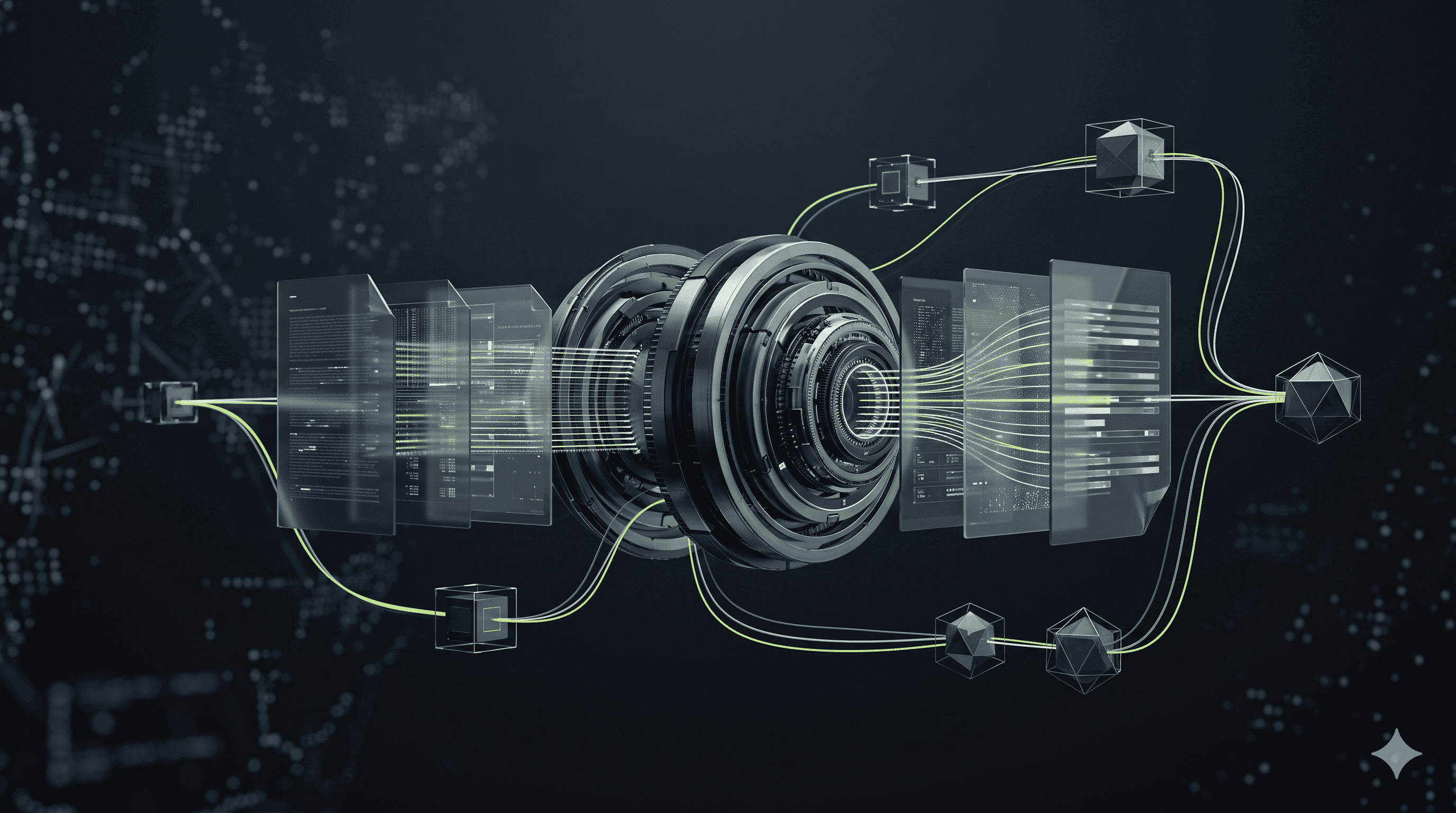
Enterprise AI | Document Intelligence
Exploring AI-Assisted Tender Intelligence to Streamline Document Review and Bid Preparation
Enterprise AI | Document Intelligence