Intelligent Automation & AI Integration
AI Automation Services, Enterprise Integration & Conversational AI
Automate Your Operations. Connect Your Systems. Transform Customer Interactions.
Modern businesses rely on multiple applications, platforms, and communication channels to operate. Yet disconnected systems, repetitive manual tasks, delayed responses, and fragmented customer information can create unnecessary operational complexity.
Webzenith Solutions helps businesses address these challenges through intelligent automation, AI integration, business process engineering, and conversational AI solutions.
We design and implement automated workflows that connect existing enterprise applications, streamline internal operations, and support customer interactions through intelligent voice and digital assistants.
Our approach starts with understanding your business processes, identifying opportunities for improvement, and engineering solutions that fit your existing technology environment.
What Is Intelligent Automation & AI Integration?
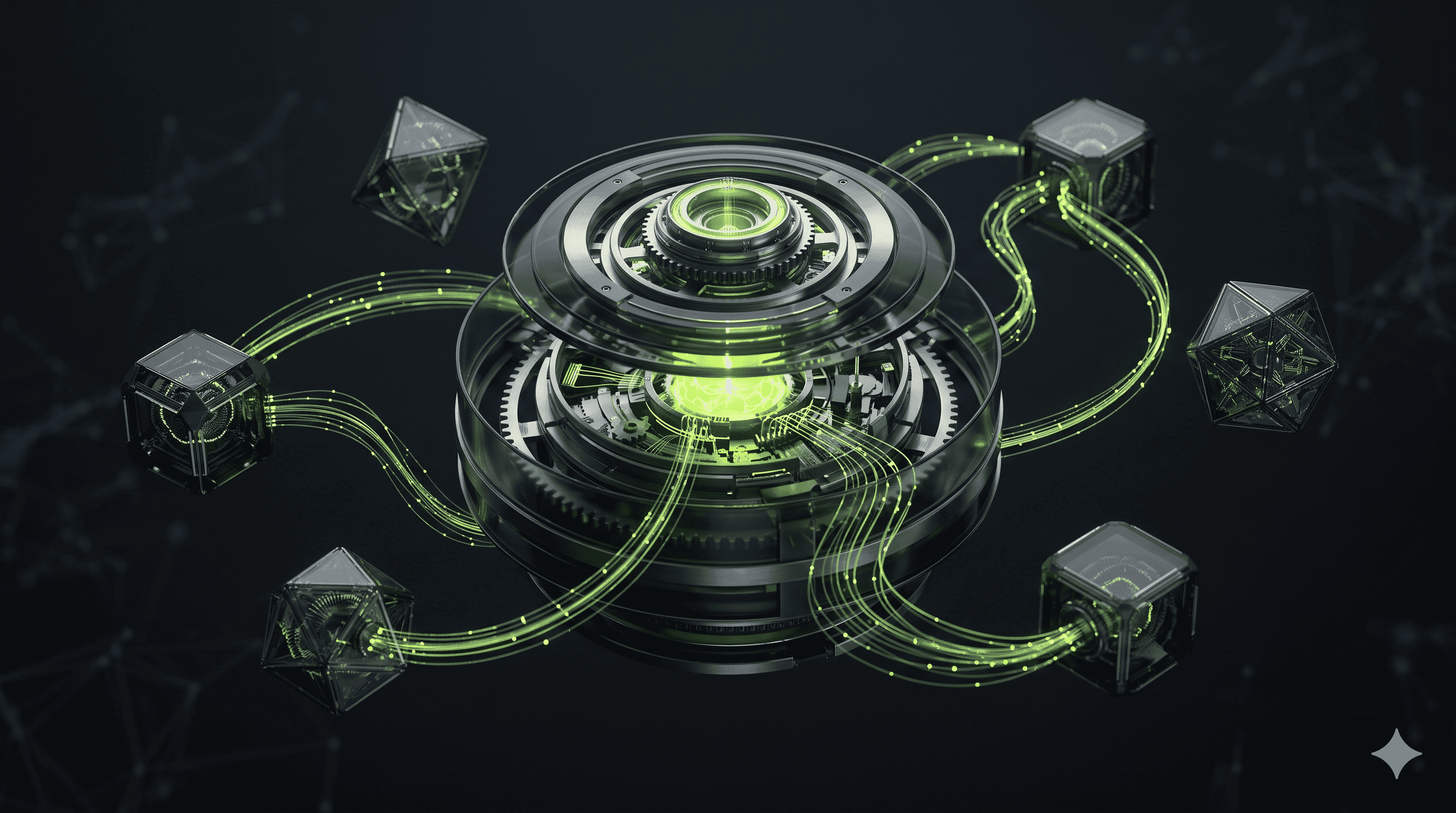
Intelligent automation combines business process automation, application integration, predefined workflow logic, and artificial intelligence to support or execute operational tasks.
AI integration involves incorporating intelligent capabilities into existing business software, communication channels, or enterprise systems without necessarily replacing the underlying technology.
For example, a company can connect its customer relationship management (CRM) platform with incoming enquiries, appointment scheduling, AI voice agents, customer support systems, and internal reporting tools.
The result is a more connected operating environment where information can move between approved systems, repetitive tasks can be automated, and employees can focus on activities requiring human judgment.
Who Is It For?
Our intelligent automation and AI integration services are designed for:
- Businesses managing repetitive processes across multiple applications.
- Enterprises looking to connect CRM, ERP, and operational platforms.
- Sales teams seeking faster lead routing, follow-ups, and customer engagement.
- Customer support departments handling high enquiry volumes.
- Healthcare providers looking to streamline appropriate administrative workflows.
- Service businesses seeking AI receptionists and appointment scheduling assistants.
- SaaS companies introducing automation into existing products.
- Organizations looking to modernize operations without replacing every business system.
Our Core Automation & Integration Capabilities
1. Business Process Automation
Repetitive processes can consume valuable employee time and create operational delays.
We design automated business workflows that coordinate defined tasks, move information between systems, and reduce unnecessary manual intervention.
Common applications include:
- Lead capture, validation, and assignment.
- Customer onboarding and account creation.
- Sales follow-up workflow coordination.
- Order processing and status notifications.
- Internal approvals and escalation workflows.
- Document routing and data extraction.
- Invoice processing and administrative automation.
- Scheduled reporting and data synchronization.
Where appropriate, automation combines deterministic business rules with AI-assisted processing.
2. CRM & ERP Integration
Disconnected systems can cause duplicate records, delayed updates, and inconsistent operational information.
We develop integration solutions that connect existing enterprise applications and facilitate approved data exchange.
Integration scenarios can include:
- CRM integration with website enquiries and customer support systems.
- ERP integration with inventory and operational platforms.
- Sales and marketing workflow synchronization.
- Customer information updates across connected tools.
- Accounting and invoicing workflows.
- Custom dashboards and operational reporting.
- Data mapping, transformation, and synchronization.
Our integration approach considers API availability, authentication, data consistency, failure recovery, and security requirements.
3. Conversational AI & Voice AI Agents
Businesses increasingly require efficient ways to handle customer calls, answer routine questions, schedule appointments, and coordinate customer interactions.
Voice AI agents combine speech recognition, conversational AI, business logic, and speech synthesis to support spoken interactions.
Webzenith develops voice AI solutions around defined communication workflows and integration requirements.
Potential applications include:
- AI-powered virtual receptionists.
- Inbound customer enquiry handling.
- Appointment booking and rescheduling.
- Customer support call assistance.
- Lead qualification through approved conversational workflows.
- Call routing and escalation.
- Order or service-status enquiries.
- Follow-up calling where applicable laws, permissions, and consent requirements are satisfied.
Voice agents can be integrated with approved calendars, CRMs, knowledge bases, telephony platforms, and customer service systems.
For complex or sensitive conversations, the system can be designed to transfer the interaction to an appropriate human representative.
4. Conversational AI & Customer Support Automation
Conversational AI is not restricted to phone calls.
Businesses can also integrate intelligent assistants into websites, applications, and supported messaging channels.
Potential solutions include:
- Website-based customer support assistants.
- AI-powered FAQ and knowledge assistants.
- Customer enquiry classification.
- Automated ticket creation and routing.
- Internal employee support assistants.
- AI-assisted response preparation.
- Contextual information retrieval.
- Human support escalation.
Conversational AI systems should be designed around accurate knowledge sources, appropriate access permissions, and clearly defined escalation procedures.
5. AI-Powered Workflow Automation
Certain workflows require interpreting unstructured information rather than simply following fixed rules.
AI can assist with tasks such as:
- Email and document classification.
- Information extraction from forms and files.
- Customer request summarization.
- Knowledge retrieval.
- Operational report preparation.
- Exception identification.
- Natural language processing within existing workflows.
For business-critical applications, AI outputs should be validated before they trigger consequential actions.
6. API Development & Enterprise System Integration
Modern automation depends on reliable communication between applications.
Our integration services can include:
- Custom REST API development.
- Third-party API integrations.
- Webhooks and event-driven workflows.
- Secure application authentication.
- Data synchronization and transformation.
- Middleware and orchestration components.
- Error handling and retry mechanisms.
- Integration monitoring and logging.
The objective is to create maintainable connections between business systems while protecting data integrity and controlling operational risk.
Voice AI Solutions for Business Operations
AI Receptionists
An AI receptionist can answer supported inbound calls, provide information, capture enquiry details, and route conversations according to configured workflows.
For appointment-driven businesses, the assistant may check calendar availability, propose suitable slots, and create bookings through authorized integrations.
AI Appointment Scheduling
Voice-based scheduling systems can help manage routine booking requests, confirmations, and rescheduling workflows.
Integration with calendars and business software is essential to prevent duplicate appointments and inconsistent availability information.
AI Customer Support Agents
AI-powered voice assistants can help answer common questions using approved information sources, retrieve relevant service information, and escalate unresolved requests.
Human support remains important for sensitive, complex, or high-risk enquiries.
AI Sales & Lead Qualification
AI-assisted calling workflows can collect relevant enquiry information, perform predefined qualification steps, and update connected sales systems.
Outbound calling requires particular attention to consent, applicable telemarketing laws, call identification, and customer communication preferences.
AI Voice Integration with CRM & ERP
A conversational system becomes more operationally useful when it can securely interact with approved business applications.
For example, an authorized voice agent may retrieve an appointment status, create a support ticket, or update a CRM record through validated tools and access controls.
How Our Voice AI Systems Work
A typical conversational voice workflow involves:
- A customer initiates or receives a permitted call.
- The system processes incoming speech through speech recognition.
- A conversational AI component interprets the request using approved instructions and business information.
- The application retrieves relevant information or invokes authorized tools where necessary.
- A speech synthesis component generates the spoken response.
- The interaction continues, resolves, or escalates to a human representative.
- Relevant events may be logged or synchronized with approved business systems.
Production implementation requires consideration of latency, interruption handling, speech recognition quality, incorrect responses, tool permissions, error recovery, and privacy requirements.
Common Business Challenges We Address
Manual Work Across Disconnected Systems
Employees may spend significant time copying information between spreadsheets, CRMs, email, and internal applications.
Integration and workflow automation can reduce repetitive tasks and improve information consistency.
Missed Customer Enquiries
Companies handling substantial call and enquiry volumes may struggle to respond consistently.
Conversational AI and voice automation can support routine enquiry handling, with human escalation for more complex situations.
Slow Internal Approvals
Manual approval processes can delay operations.
Structured workflows can route requests, notify responsible personnel, and maintain clear records of approval status.
Inconsistent Customer Information
Disconnected applications can create conflicting records and incomplete customer histories.
Appropriate integration can improve data synchronization and operational visibility.
Difficulty Introducing AI into Existing Operations
Businesses may want AI capabilities without rebuilding their entire technology infrastructure.
API-based integrations and workflow orchestration can introduce selected AI functionality into supported existing systems.
Our Implementation Approach
Phase 1: Business Process Discovery
We review your operational workflows, technology stack, integration requirements, and business objectives.
This includes identifying automation opportunities, existing bottlenecks, process exceptions, and security constraints.
Phase 2: Automation & Integration Architecture
We define how applications, APIs, AI components, data sources, and human approval workflows will interact.
For voice AI projects, this also includes conversation flows, supported actions, escalation rules, and telephony integration requirements.
Phase 3: Development & Configuration
We implement the agreed automation workflows, integration services, conversational systems, or voice AI components.
The engineering process may involve backend development, API integration, workflow orchestration, and administration interfaces.
Phase 4: Testing & Evaluation
Solutions are assessed against relevant requirements, including:
- Workflow execution accuracy.
- Integration reliability.
- Data consistency.
- Response quality.
- Voice latency and interruption handling.
- Error recovery.
- Access permissions.
- Human escalation behavior.
- Operational security.
Phase 5: Deployment & Integration
Validated solutions are connected to the agreed production environment with appropriate access controls, monitoring, and operational procedures.
Phase 6: Monitoring & Continuous Improvement
Automation workflows may require adjustments as processes, software platforms, or customer requirements change.
Relevant performance indicators can be monitored to identify operational issues and improvement opportunities.
Security, Privacy & Responsible AI Automation
Business automation and conversational AI may interact with sensitive customer information, enterprise applications, and communications infrastructure.
We evaluate appropriate safeguards based on the project requirements.
Relevant considerations include:
- Authentication and role-based access controls.
- Least-privilege application permissions.
- Secure API connections.
- Data minimization and retention controls.
- Audit logging and operational traceability.
- Human review for sensitive actions.
- Voice AI disclosure and consent requirements.
- Secure handling of recordings and transcripts.
- Prompt injection and tool misuse protection.
- Applicable privacy, telecommunications, and sector-specific requirements.
For regulated industries, implementation may require additional controls and compliance review.
Webzenith's automation and AI integration services do not automatically establish SOC 2 or HIPAA compliance. Those requirements must be assessed as part of the relevant engagement.
Measuring Business Impact
Automation success should be evaluated against real operational baselines.
Depending on the project, relevant metrics may include:
- Reduction in manual processing time.
- Number of workflows executed successfully.
- Customer enquiry response time.
- Appointment booking completion rate.
- Call transfer and escalation rate.
- Data synchronization accuracy.
- Workflow error rate.
- Operating cost per completed process.
The actual improvement achieved depends on the process design, underlying systems, implementation quality, and operating conditions.
Frequently Asked Questions
What does an AI automation company do?
An AI automation company helps organizations automate operational workflows, integrate existing business software, and introduce AI capabilities into selected processes. Services can include business process automation, CRM and ERP integrations, conversational AI, and intelligent document processing.
Can AI integrate with our existing CRM or ERP?
Yes, many CRM and ERP systems support integration through APIs, webhooks, connectors, or custom middleware. Implementation feasibility depends on the platform's available interfaces, permissions, and data requirements.
What is a Voice AI Agent?
A Voice AI Agent is a software system designed to understand spoken requests, generate conversational responses, and potentially perform authorized tasks through connected applications. It typically combines speech recognition, language processing, speech synthesis, and business workflow integrations.
Can an AI receptionist answer customer calls?
An AI receptionist can handle supported inbound call scenarios, such as routine enquiries, appointment scheduling, information collection, and call routing. Performance depends on the conversation design, knowledge sources, speech technology, and integration reliability.
Can AI voice agents make outbound calls?
Technically, yes. Outbound AI calling must be assessed against applicable telecommunications, privacy, consent, and marketing regulations. Whether a particular campaign is permissible depends on the jurisdiction, audience, and communication purpose.
Can an AI voice agent book appointments automatically?
Yes, when properly integrated with an authorized scheduling system. The application must check availability, handle scheduling conflicts, and confirm transactions before communicating completion.
What is the difference between AI automation and agentic AI development?
AI automation focuses on improving business workflows through a combination of software integrations, predefined logic, and intelligent capabilities. Agentic AI development focuses on building systems that can use approved tools and execute goal-oriented tasks. The two approaches can overlap, but not every automated workflow requires an AI agent.
How much do AI automation and Voice AI solutions cost?
Costs depend on workflow complexity, integrations, telephony infrastructure, model usage, deployment requirements, testing, and support. Voice AI applications may also incur usage-based costs associated with call duration, speech processing, and model inference.
How long does implementation take?
Timelines depend on the number of workflows, applications, integrations, compliance requirements, and acceptance criteria. A limited automation pilot generally requires less effort than a multi-system enterprise implementation.
Is Voice AI secure for business use?
Voice AI can be developed with authentication, access restrictions, data protection controls, appropriate logging, and human escalation mechanisms. Security and compliance must be validated for the intended business environment.
Connect Your Systems. Automate Your Workflows. Elevate Customer Experiences.
Technology should simplify business operations rather than create new layers of complexity.
Webzenith Solutions helps organizations combine intelligent automation, enterprise software integration, and conversational AI to create more connected, efficient, and manageable business processes.
Whether you need to automate a repetitive workflow, connect your existing applications, introduce an AI receptionist, or integrate voice AI into customer operations, we can help define an appropriate engineering solution.
Let's Build a Smarter Operating System for Your Business.
Book an AI Transformation Audit or discuss your automation requirements with Webzenith Solutions.
6 Phases
From process discovery and solution architecture to deployment and optimization.
6 Core Automations
Business process automation, AI workflows, CRM/ERP integration, APIs, document processing, and orchestration.
3 Automations
Rules-based workflows, AI-assisted processes, and coordinated system integrations.
4 Performance Indicators
Defined measures covering operational efficiency, workflow reliability, and customer interaction quality.
CLIENT PERSPECTIVE
The Companies We Build With Say it
Better Than We Ever Could.

CRM Integration | Sales Automation
Designing AI-Powered CRM Intelligence and Automated Sales Workflows Without Replacing Existing Systems
CRM Integration | Sales Automation
Designing AI-Powered CRM Intelligence and Automated Sales Workflows Without Replacing Existing Systems

Hospitality Technology | Conversational AI
Connecting Voice AI Ordering, Payments, and Kitchen Operations Through Intelligent Automation
Hospitality Technology | Conversational AI
Connecting Voice AI Ordering, Payments, and Kitchen Operations Through Intelligent Automation

Procurement Technology | Enterprise Automation
Designing an AI-Powered Government Tender Intelligence and Response Automation Platform
Procurement Technology | Enterprise Automation
Designing an AI-Powered Government Tender Intelligence and Response Automation Platform

Customer Engagement | Voice AI Automation
Engineering an AI Appointment Agent for Automated Customer Conversations and Scheduling
Customer Engagement | Voice AI Automation
Engineering an AI Appointment Agent for Automated Customer Conversations and Scheduling
Enterprise Integration | Workflow Orchestration
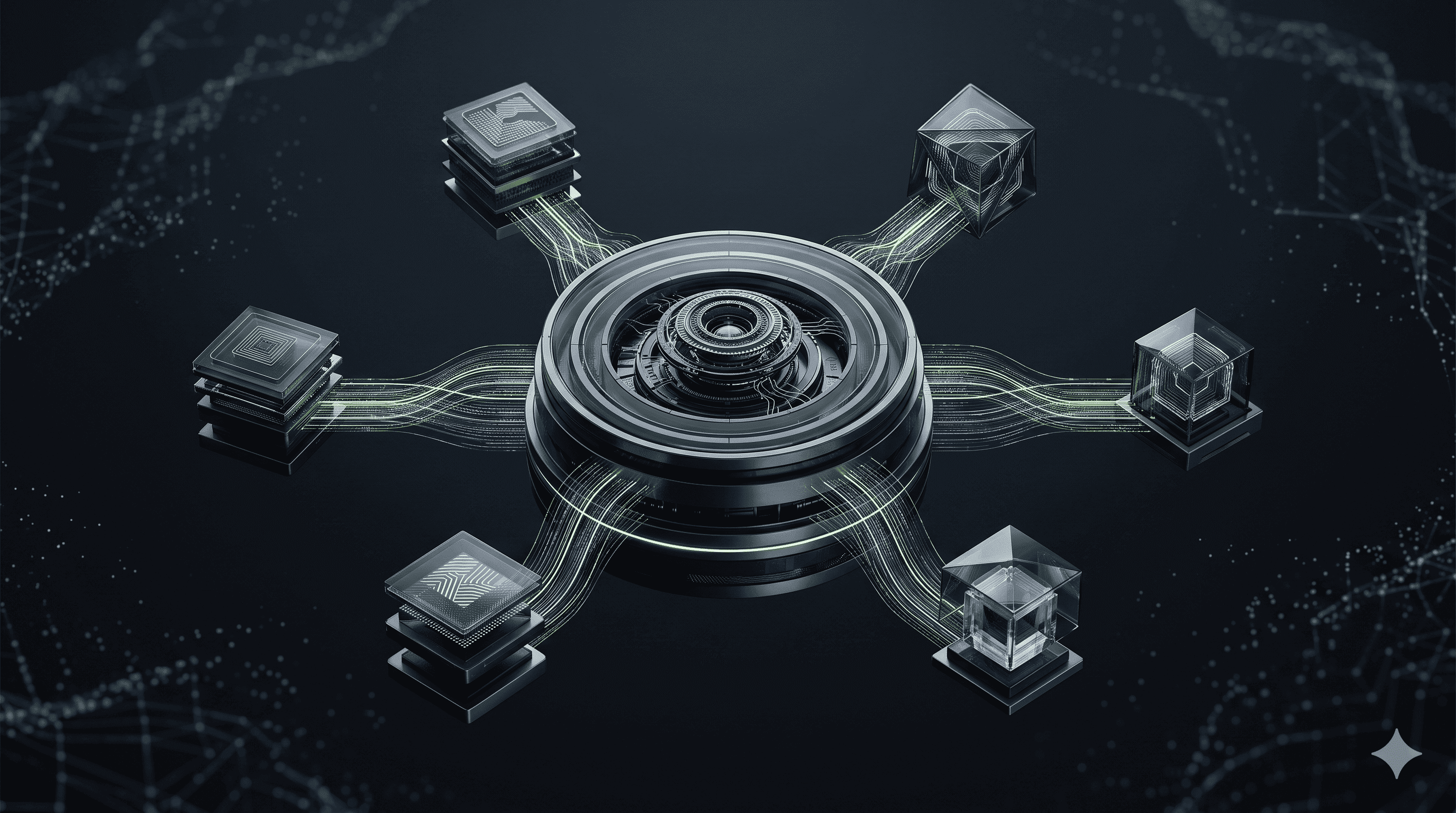
Designing Connected Enterprise Workflows Through Middleware and Cross-Platform Automation
Enterprise Integration | Workflow Orchestration